
Alentejo Slow Travel: A Seven Day Week of Wine, Cork Roads and Empty Horizons
Seven days across the Alentejo at the speed the region actually moves, with the wine estates, villages and long lunches that make it work.

Alentejo slow travel is less an itinerary than a decision to stop covering ground. The region occupies a third of Portugal and holds about five per cent of its population, which means long straight roads, wheat that turns from green to gold between March and June, and villages where lunch takes two hours because there is no reason for it to take less. This week is built around that pace.
Day 1 and 2: Évora
Start in the walled city. The Roman temple gets the postcards, but the Igreja de São Francisco with its bone chapel and the covered market on Praça 1 de Maio tell you more about how the town lives. Eat at a tasca off Rua do Raimundo rather than on the main square. On the second morning drive twenty minutes to the Almendres Cromlech, a ring of standing stones older than Stonehenge, usually with nobody there. Our Alentejo slow food article covers what to order in Évora in detail.
Day 3: Monsaraz and the Alqueva lake
Head east through Reguengos. Monsaraz is a whitewashed village on a hill with the largest artificial lake in western Europe below it. Stay the night, because the Alqueva region is a certified Dark Sky Reserve and the star visibility after eleven is the reason to be here. Several estates run guided sky sessions with telescopes.
Day 4: Cork country
Drive the back roads between Montemor-o-Novo and Coruche in May or June and you will see cork oaks stripped to a deep red trunk, numbered with the year of harvest. Stop at a working estate for a tour. This landscape is a montado, a grazing woodland managed by hand for centuries, and it produces roughly half the world's cork. More on it in our Alentejo cork farms guide.
Day 5: Vila Nova de Milfontes
Cut west to the coast. The Alentejo shoreline is wilder and colder than the Algarve, with cliffs, river beaches and fewer beach clubs. Milfontes sits where the Mira estuary meets the ocean, warm enough to swim on the river side even when the Atlantic is bracing.
Day 6: Wine along the Vidigueira line
South again, into the Vinhos de Talha country around Vidigueira and Cuba, where some producers still ferment in clay amphorae the Romans introduced. Tastings are informal and cheap, often with the winemaker pouring. Do not plan to drive far afterwards.
Day 7: Mértola
End on the Guadiana river, in a town that was Roman, then Islamic, then Christian, and never quite erased any of it. The parish church still shows the mihrab from its years as a mosque. Walk down to the river at dusk, order carne de porco à alentejana, and let the week finish quietly.
Practical notes
Summer inland is brutal, regularly over 40 degrees in July and August, so travel in spring or autumn. Distances look short and take longer than the map suggests because you keep stopping. Book estate accommodation ahead in spring, and remember many village restaurants close on Sunday evening and Monday. Campervan travellers will find the Alentejo the friendliest region in the country, as covered in our Portugal campervan routes guide.
FAQ
- How many days do you need in the Alentejo?
- Five is enough for Évora, Monsaraz and one coastal night. Seven lets you add the cork roads and Mértola without rushing.
- Is the Alentejo worth visiting without a car?
- Partly. Évora is reachable by train and bus, but the villages, estates and Alqueva viewpoints need a car.
- When is the best time to visit the Alentejo?
- April to early June and mid September to October. Spring brings wildflowers and green wheat, autumn brings the grape harvest and mild days.
Latest articles
 Food & Drink
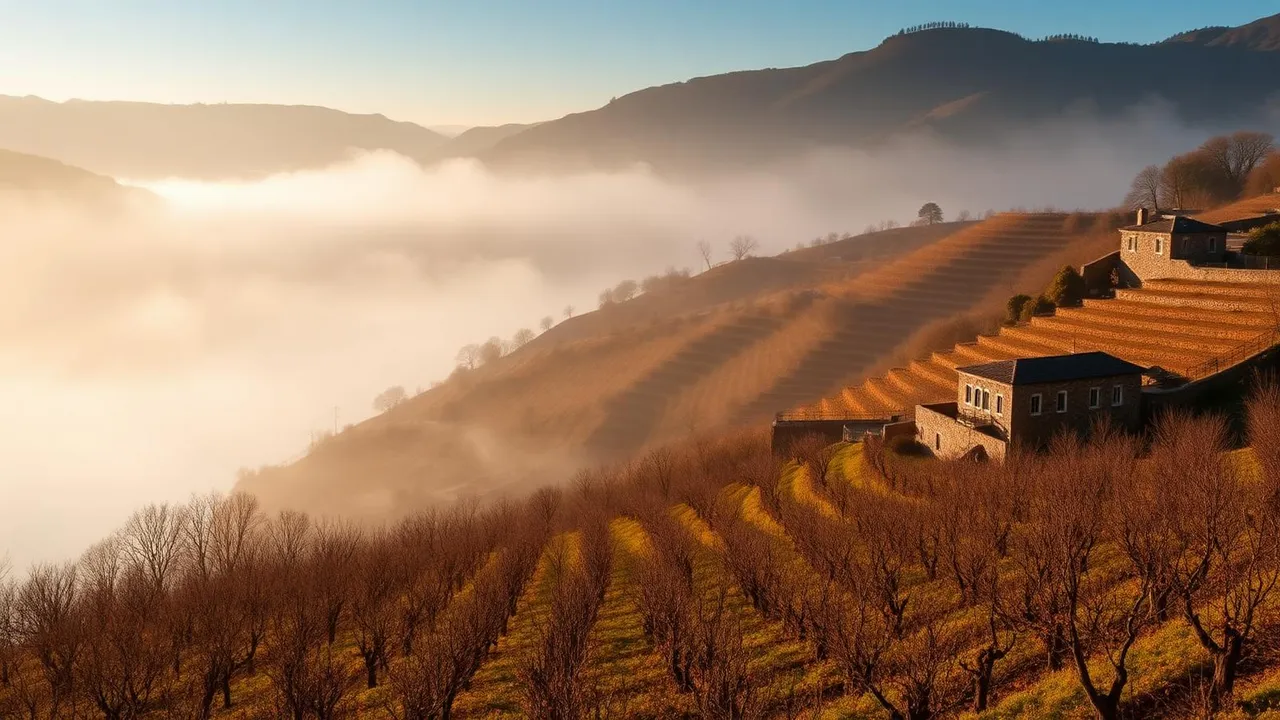
The Douro in Winter: Wine Tourism When the Vines Are Bare
No harvest crowds, no 38 degree heat, and winemakers who actually have time to talk. Winter may be the honest season in the Douro.
 Landscapes
Douro Valley: Terraces of Wine and Time
Slow trains, lazy river cruises, and family quintas where Port has been ageing for five generations.
 Food
FoodAlentejo Slow Food: Bread, Pork, and a Liturgy of Olive Oil
In Portugal's golden plains, every meal is a three hour conversation with the land.